)
Is Zanzibar Safe for Solo Travelers?


The Short Answer
Yes - Zanzibar is safe for solo travelers. Violent crime targeting tourists is rare. The risks that do exist (petty theft, persistent touts, cultural friction if you're underprepared) are real but manageable. This guide covers what they actually look like and how to navigate them, area by area.
What "Safe" Actually Means in Zanzibar
"Safe" is doing some work in the short answer above, so let's be precise about what it covers.
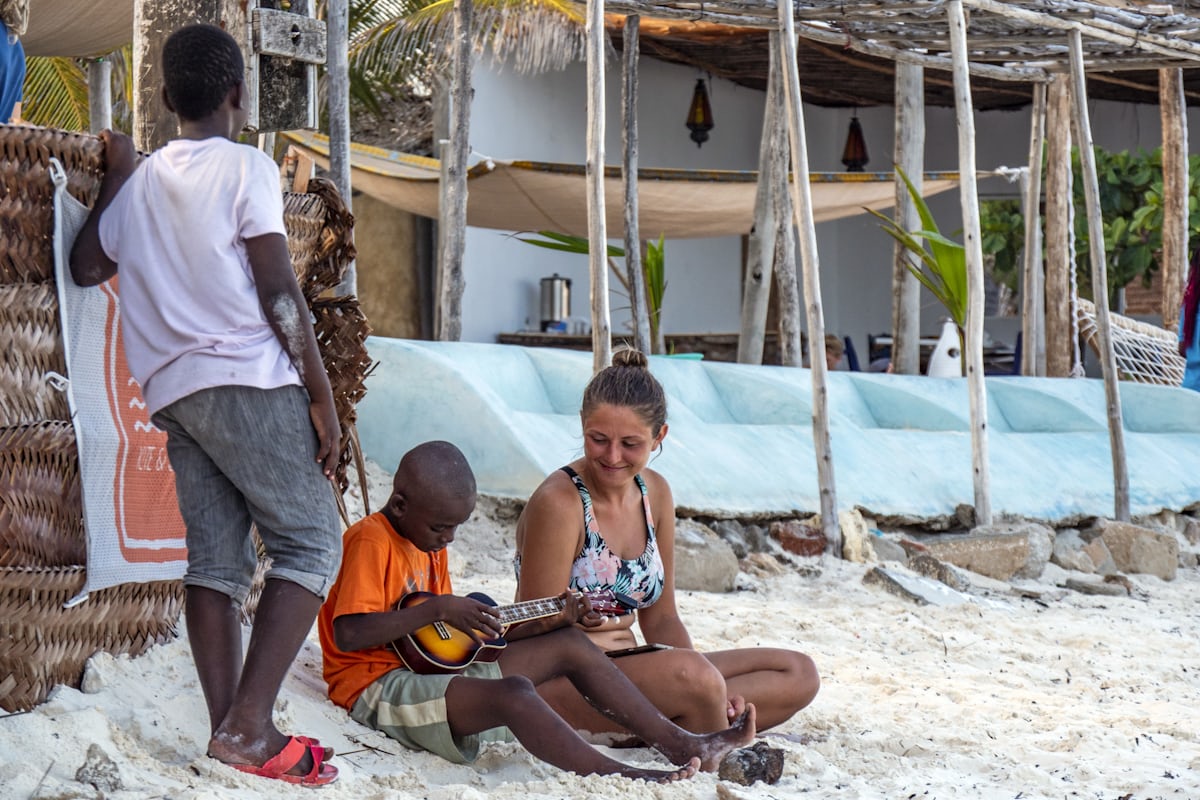
Zanzibar has a low rate of violent crime compared to most African destinations. Tourists are not commonly mugged, assaulted, or robbed at gunpoint. That is a meaningful baseline. But "safe" on this island does not mean frictionless. It does not mean you can walk Stone Town's back alleys at 1am with your phone out and expect nothing to happen. It does not mean every man who approaches you on the beach has neutral intentions.
What solo travelers actually encounter in Zanzibar, in order of likelihood:
Petty theft — pickpocketing and bag snatching, concentrated in Stone Town's crowded markets and busy beach areas. Present, avoidable with basic awareness.
Persistent touts and beach boys — not dangerous, but relentless if you don't know how to handle them. Covered in detail below, because this is the one thing competitors don't write about honestly.
Transport scams — overcharging, last-minute route changes, dodgy dala-dala situations. Avoidable by negotiating prices before you get in anything and using trusted drivers.
Cultural friction — if you walk through a Stone Town market in a bikini top or raise your voice at a vendor, you will create unnecessary problems. This is a Muslim-majority island and it operates by different social codes than a European beach resort. Knowing those codes removes the friction entirely.
Ocean hazards — the tides on Zanzibar's east coast are dramatic. The sea is not always the placid postcard version. This is not a crime, but it has injured and killed tourists. Worth knowing.
Area-by-Area Safety Breakdown
Zanzibar is not one experience. Stone Town is dense, urban, and layered. Nungwi is a social beach resort. Paje is a kite-surf village. What's true for one is not true for another. Here is the breakdown.
| Area | Daytime | Nighttime | Main Watch-Out |
|---|---|---|---|
| Stone Town | 🟢 Fine | 🟡 Stick to main streets | Pickpockets in markets, unlit alleys |
| Nungwi / Kendwa | 🟢 Very easy | 🟢 Busy, social | Beach boys, standard nightlife precautions |
| Paje / Jambiani | 🟢 Very easy | 🟢 Quiet, low friction | Tidal waters - check before you swim |
| Remote beaches | 🟡 With company | 🔴 Avoid solo | Isolation. Basic common sense applies. |
Stone Town
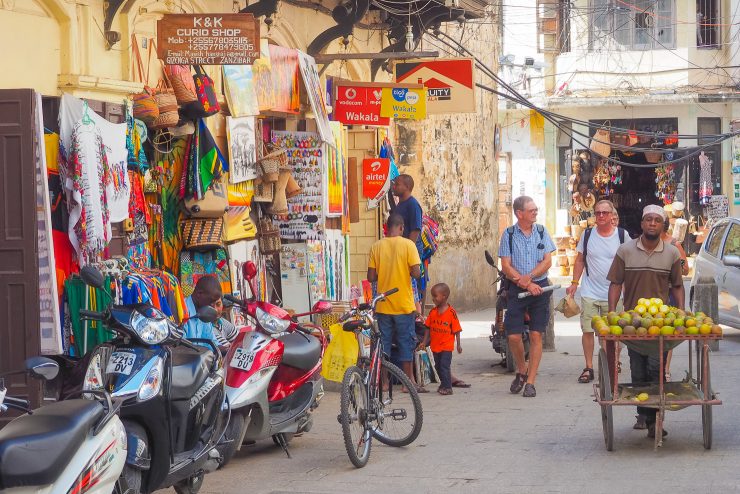
During the day, Stone Town is one of the more fascinating places to walk around solo in East Africa. The medina is dense and the architecture rewards slowness. The main tourist corridors - the waterfront, Forodhani Gardens, the bazaar - are busy and well-watched.
At night, the same principle that applies to any dense urban medina applies here: the main streets are fine; the unlit back alleys are not the place to wander alone, especially if you don't know where you're going. Get your accommodation to call a taxi rather than flagging one at the port from strangers. This is a fifteen-second precaution that removes most risk.
Practical note: Stone Town's layout will defeat your phone's GPS. The alleys don't register properly on Google Maps. Get the name of a landmark near your accommodation written down in Swahili before you go out. It will save you.
Nungwi & Kendwa
The northern tip of the island is where most solo travelers end up, and for good reason - it is the easiest place to be solo on Zanzibar.
The beach is busy, the accommodation options are dense, restaurants stay open late, and there is a genuine social scene. Meeting other travelers here requires almost no effort. At night it has the energy of a well-functioning resort town. The main thing to watch is the beach boy situation, which is covered in the next section.
Paje & Jambiani (East Coast)
Paje attracts kitesurfers, yoga retreaters, and people who want to be left alone on a beautiful beach. It is notably lower-friction than Nungwi - less tout activity, quieter social scene, more space. Jambiani is even quieter. Solo travelers who want some solitude fare very well here.
The thing to know about the east coast is the tide. When the tide is out it is truly, dramatically out - sometimes a kilometer of shallow lagoon. Swimming in these conditions is not the point; the ocean swimming is better at high tide. Check the tide chart before you expect a swim. This is less of a safety warning and more of a logistical one, but tourists who don't know this leave disappointed and occasionally get caught in currents at the wrong moment.
Finding solo-friendly accommodation? Well-reviewed hotels in Zanzibar with genuine security and good host knowledge of the area.
The Beach Boys: What Actually Happens
Most guides either skip this or write one diplomatic sentence about "friendly locals who may approach you." That is not useful. Here is what actually happens.
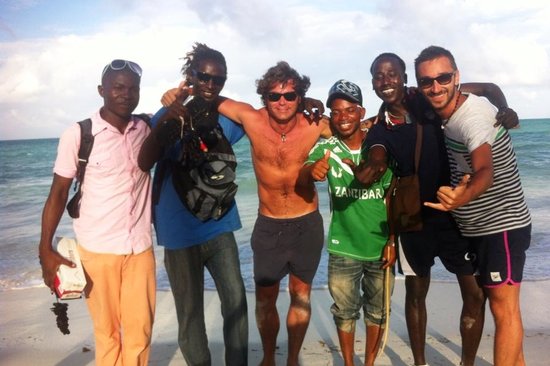
Beach boys are young men, primarily at Nungwi and Stone Town's waterfront, who approach tourists offering tours, transport, spices, companionship, or sometimes just sustained conversation that will eventually circle back to a sale.
They are not dangerous. They can be exhausting.
The dynamic works like this: if you engage at length, negotiate slowly, or seem uncertain, the attention intensifies. If you say "no thank you" clearly and keep walking, most of them move on immediately. The word in Swahili is hapana asante - no thank you - and it works better than prolonged polite English refusals.
“The beach boys are not the problem people make them. Once you understand that a clear "no" ends most encounters, the island gets noticeably easier.”
Solo female travelers encounter more persistent attention than men, which is why the female section below addresses it directly. Solo male travelers will deal with tour offers and the occasional hash approach. Neither requires confrontation - just clarity.
One practical note: a good local driver or guide relationship changes this entirely. When you're clearly with someone who knows the place, the unsolicited approaches largely stop. This is part of why having a trusted local contact is worth more than any list of safety tips.
Is Zanzibar Safe for Solo Female Travelers?
Yes - and with more nuance than the standard "yes with the usual precautions" answer provides.

Yes - and with more nuance than the standard "yes with the usual precautions" answer provides.
Zanzibar is not Marrakech. It is not aggressively predatory in the way some North African medinas can feel to a woman alone. Zanzibari men are generally not threatening. What solo women do experience is more sustained attention - on the beach, in Stone Town, occasionally on transport - that can tip from annoying into genuinely uncomfortable if you're underprepared for it.
The modesty question
Zanzibar is a Muslim-majority island and it has a different set of social norms than, say, Bali or a Greek island. Off the beach - in Stone Town, in any village, on any road between beaches - covering your shoulders and knees is not a rule enforced by anyone, but it is the thing that makes the biggest single difference to how you move through the island. A light linen shirt and loose trousers take ten seconds to put on after leaving the beach. They reduce unsolicited attention significantly.
This is not about whether you should have to do it. It is about what actually works.
Transport and night movement
Pre-arranged transport is the practical standard for solo women in Zanzibar, especially at night. Not because Zanzibar taxis are inherently dangerous, but because a pre-arranged driver whose number you have, whose face you've already met, is a meaningfully different situation than a random daladala at midnight.
Ask your accommodation to recommend a driver when you arrive. Save the number. Use it. This is a five-minute investment that removes a category of risk entirely.
Accommodation matters more than people say. A guesthouse or hotel with a real reception, basic security, and staff who know the area gives you a local safety net. A random Airbnb with no on-site host does not. The price difference is often marginal.
Meeting people vs isolation
The practical reality for solo female travelers is that Nungwi and the east coast are both significantly easier than Stone Town for moving around alone. Stone Town is the most rewarding place on the island but it rewards people who are alert and confident in an urban environment. If you're newer to solo travel, spend your first night in Nungwi or Paje, get your bearings, and approach Stone Town as a day trip.
Tip for solo female travelers: Group day tours are one of the most practical ways to move around the island safely and meet people simultaneously.
Practical Safety Tips for Solo Travelers in Zanzibar
These are the ones that actually make a difference - not the generic travel advice recycled from every other guide.
Get a local SIM card on arrival: Tigo and Zantel both work well on the island. A local SIM costs almost nothing, gives you data, and means you're not dependent on hotel Wi-Fi when you need directions or a driver number.
Save a trusted driver's number before your first night: Ask your accommodation to recommend one when you check in. Don't wait until you're stranded somewhere at 11pm and relying on whoever's at the kerb.
Cover up as soon as you leave the beach: A light shirt over swimwear. Loose trousers. It takes no time and changes how you're perceived in town.
Don't use your phone openly in Stone Town's markets: Pockets and bag fronts are targeted in crowded areas. A money belt or a bag worn across the front is better than a backpack.
Negotiate taxi fares before you get in: There are no meters. The price is whatever you agreed on before the door closed. Agree first, every time.
Book group day tours to meet people: Stone Town spice tours, Jozani forest trips, snorkelling to Mnemba - these run daily, cost well under $50, and are how most solo travelers find their people on the island.
Tell someone where you're going for remote trips: Remote beaches, forest walks, evening boat trips. Basic. Leave a note with your accommodation or drop a message to someone.
Use your accommodation as local intelligence: A guesthouse owner who's been here twenty years knows more about current conditions, safe routes, and reliable operators than any blog article. Ask them.
Check the tide before swimming on the east coast: Particularly at Paje and Jambiani. Tidal schedules are free online and will save you from both disappointment and actual ocean hazards.
Health & Medical Safety
This is not a tropical medicine textbook. These are the things that actually matter for a trip to Zanzibar.
Zanzibar is a malaria zone. Take prophylaxis (Malarone or doxycycline), use DEET repellent in the evenings, and sleep under a net. This is not optional.
Water
Tap water is not for drinking. Bottled water is widely available and cheap everywhere. Brush teeth with bottled water if you're cautious.
If you're arriving from a yellow fever endemic country, you need the vaccination certificate. Check whether your origin country triggers this requirement.
Sun & Heat
The equatorial sun is stronger than it feels. SPF 50, hydration, hat. Sunstroke on day one is a Zanzibar tradition you don't want to participate in.
Stomach
Street food is generally fine at busy stalls with fast turnover. Forodhani Night Market in Stone Town is a reasonable starting point. Take rehydration salts anyway.
The Honest Verdict
Zanzibar is one of the more straightforward solo destinations in Africa. The risks are real but they're legible - petty theft, touts, the odd transport scam, a Muslim culture that has preferences about how you dress. None of these are complicated to navigate. None of them require fear.
What Zanzibar requires is a little preparation: know which areas you're in and what the social code is, have a driver number saved, cover your shoulders when you leave the beach, and say no clearly when you need to. Do those things and the island will largely take care of the rest.
The people here are genuinely warm. The place is genuinely beautiful. The paranoid, exhausting version of solo travel - where you treat every stranger as a threat - is both unnecessary and a waste of a remarkable island.
People Also Ask
Is Zanzibar safe for solo female travelers?
Yes, with some practical adjustments. Zanzibar is significantly safer for solo women than many African destinations. The main things to know: dress modestly when away from the beach, use pre-arranged transport at night, and stay in well-reviewed accommodation. Harassment exists but is mostly low-level and avoidable with the right preparation. The full section above covers this in detail.
Is Stone Town safe at night?
The main tourist corridors - Forodhani Gardens, the waterfront, the main bazaar area - are generally fine at night and stay lively. The labyrinthine alleys further into the medina are poorly lit and disorienting even in daylight. Don't wander those alone after dark. Stick to lit streets or use a pre-arranged taxi.
What are the biggest risks for tourists in Zanzibar?
In order of likelihood: persistent beach boys and touts (annoying, not dangerous), petty theft in crowded areas such as Stone Town's markets, transportation overcharging and scams, and ocean hazards including strong tides on the east coast. Violent crime directly targeting tourists is rare.
What should solo female travelers wear in Zanzibar?
At the beach, normal swimwear is fine. Away from the beach - in Stone Town, villages, markets, and on the road between any of them - cover your shoulders and knees. A light linen shirt and loose trousers is the practical standard. It takes seconds and makes a real difference to how you move through the island
Is Zanzibar safer than other African beach destinations?
For solo travelers specifically, Zanzibar compares favorably to most alternatives on the continent. Violent crime rates are low. The island is small, well-trafficked by tourists, and has solid transport and accommodation infrastructure. Solo travel here is considerably more straightforward than in parts of West Africa and more relaxed than many comparable beach destinations in Southeast Asia where tourist scam economies are more sophisticated.